
Threats to the
BLACK HARRIER
Threats facing the Black Harrier
A species under pressure
The Black Harrier is one of southern Africa’s most threatened birds of prey. With a small population and specialised habitat needs, even small changes across the landscape can have big impacts on their survival.
Unlike many species that rely on a single habitat, Black Harriers move across large areas. This means they face threats across vast stretches of land, from breeding sites to roosting and foraging areas.
Understanding these threats is essential to protecting the Black Harrier and the landscapes it depends upon.
individuals
Black Harrier threats: Quick facts
- Around 1 200 individuals remain.
- Habitat destruction may have removed up to 90% of some of their habitats, such as renosterveld.
- Most mortality occurs either on migration or at wind farms during breeding season.
- Currently, an average of 3.8 Black Harriers are killed by wind farms every year. This is predicted to increase with the continued push for renewable energy.
- Models show that losing another three to five individuals per year will lead to extinction in 75 years.
conservation status
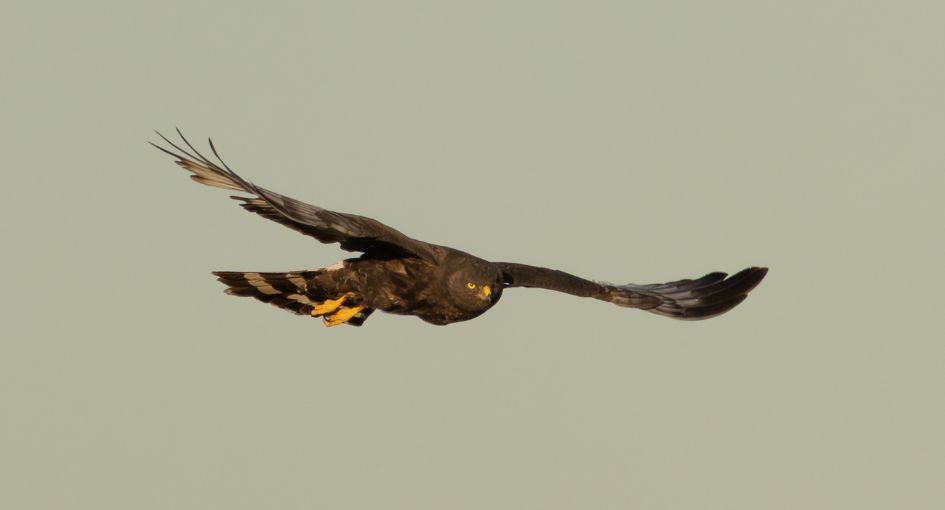
The Black Harrier is listed as Endangered on the national Red List as well as the IUCN Red List of Threatened Species, with a small and declining population. Around 1 200 individuals, or 420 breeding pairs, are believed to remain, making it the most threatened endemic raptor in southern Africa.
Habitat loss, degradation and fragmentation
One of the biggest threats facing the Black Harrier is the loss of natural habitat. The species depends heavily on healthy, intact renosterveld and fynbos, two of southern Africa’s most threatened ecosystems. Renosterveld in particular has been lost in recent decades, mostly to agriculture, with only 5% remaining today. Other threats to fynbos include urban developments and infrastructure like wind farms and powerlines that pose significant collision risks. As habitat is lost, Black Harriers have fewer safe places to breed and hunt.
Given that birds tend to favour protected areas and well-connected, contiguous stretches of natural vegetation, the fragmentation and degradation of natural habitats increases their vulnerability.
Wind turbines
As Black Harriers move across landscapes, they may encounter several collision risks, most notably wind farms. Their large, spinning blades pose a serious collision risk, particularly in areas where birds are foraging, displaying or breeding.
Because Black Harriers fly low and fast while hunting, they would be expected to fly below any spinning blades. However, flight patterns change through the breeding season with birds flying higher on average as they commute across country with prey for their nestlings. This brings them more and more into the blade swept zone (peaking in November) and thus vulnerable to wind turbines. A recent study (Cervantes et al. 2022) found that losing just three to five adults every year will cause species’ extinction in less than a century.
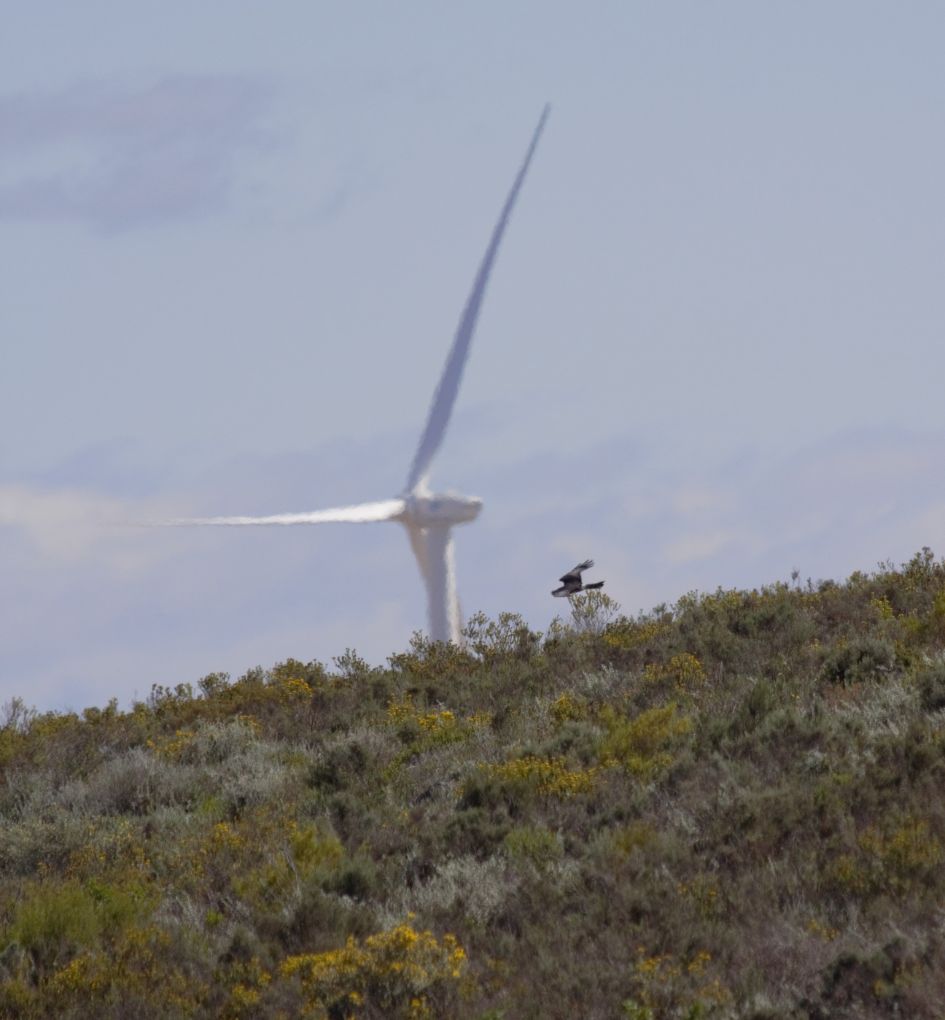
Understanding how harriers move across landscapes helps guide better planning and reduce potential risks. Careful placement and planning of infrastructure and relevant mitigation measures is therefore important to ensure that Black Harrier conservation and development can coexist.
Other collision risks: Powerlines, fences and vehicles
While wind turbines have become an unexpected and significant cause of mortality among harriers, other collision risks facing these birds include vehicles, fences and most notably, powerlines. Collisions with powerlines have been recorded in a number of raptor species, and Black Harriers are no exception. A previous study found that three out of 12 satellite-tracked birds were killed through powerline collisions.
Reducing these risks requires collaboration between conservation partners and infrastructure developers, but is extremely challenging given the extensiveness of the grid’s network and the large distances covered by harriers.
Human disturbance
Black Harriers nest on the ground in natural vegetation. This makes them particularly vulnerable to disturbance.
Activities such as farming, wild-flower harvesting, development and recreation can unintentionally disturb breeding birds, which may lead to nest abandonment or reduced breeding success. There is even a record of a breeding male, whose favoured roosting site was in the middle of a wheat field, being killed by a wheat cutter during nighttime harvest in the Overberg. These infrequent but worrying risks cannot all be mitigated, but emphasise the importance of protecting nesting areas during breeding season.
Small population size
With a relatively small population of around 1 200 individuals, the Black Harrier is particularly vulnerable to negative anthropogenic influences. Even small increases in adult mortality or reduced breeding success can have long-term consequences. Low reproductive rates make recovery from population declines especially challenging for a species with an already-limited genetic diversity. The limited genetic diversity found in a 2014 study means that genes that may have helped it adapt to lower rainfall or higher temperatures are likely to have been lost as the population size declined. This makes it less likely to survive the changing climates and landscape in future.
Climate change
Changing climate patterns may also affect Black Harriers by altering habitat conditions and prey availability. Shifts and declines in rainfall patterns and vegetation can impact where harriers are able to breed and hunt. For example, almost every aspect of this species’ ecology is linked to rainfall and temperature from where it breeds (higher rainfall areas with high greenness indices), how well it breeds (higher productivity when rains have been plentiful), to how often it delivers prey to the nest (fewer items in hotter weather).
Gauging how climate is predicted to alter the distribution of suitable habitat and availability is key for proactive, long-term conservation planning. Recent research (Colyn et al. 2025) suggests that the species’ already-restricted breeding range will shrink to about 20% of its current size by 2080 if present trends continue. Coastal fynbos, renosterveld remnants and mountains being their last refuge with increasing temperatures. Protected Area Expansion plans therefore need to ensure that these areas are kept safe from further transformation, development and degradation.
Poisoning and pesticides
The impact of poisonings and pesticide use is not yet well understood – but it is a growing concern among conservationists. These may have sublethal or lethal effects on harriers directly or indirectly, through prey species and spray drift. These include the impacts of agrochemicals used in agricultural crops, including herbicides and pesticides such as Dichloro-Diphenyl-Trichloroethane (DDT), as well as rodenticides and other poisons used to kill agricultural ‘pests’. The worrying trend here is that DDT is banned in the breeding areas where the 113 harriers were sampled, making it likely that there is illegal use of these banned chemicals in the Western and Northern Cape. These agricultural and industrial pollutants could also be contributing towards the Black Harrier’s relatively low reproductive success. Even Polychlorinated Byphenols (PCBs) appear to be contaminating adult and juvenile harriers, as 79% of 90 nestlings and 23 adult birds blood sampled showed detectable levels, high enough to compromise their immune systems and affect the colour of their legs and cere.
There is now an urgent need to learn more about these less obvious or tangible threats, and to find solutions to address them.
Why reducing threats matters
The Black Harrier’s future depends on reducing threats across landscapes. From protecting habitat to improving infrastructure planning, conservation action can make a meaningful difference. Already we have seen one bird species go extinct in the last decade (the Slender-billed Curlew was proclaimed extinct in 2025), and another South African species, the Botha’s Lark, is also on the brink of extinction with a population of a few hundred birds. This is a measure of the decline in ecosystem health, and as a top predator, the decline of Black Harrier numbers is even more disturbing. With such top predators, by protecting their habitats, we not only conserve the Black Harrier but myriads of reptiles, amphibians, mammals, plants and other biodiversity that remains unseen.
Thus by understanding the challenges facing this species, partners can work together to secure a future for the Black Harrier and the ecosystem that supports it.