
Biology of the
BLACK HARRIER
Circus maurus
RARE RAPTOR of southern Africa
unique and vulnerable
The Black Harrier is one of southern Africa’s most threatened birds of prey. Found only in southern Africa, and nesting on the ground, it depends on large, intact natural shrublands and grasslands to survive, making it both unique and vulnerable.
Black Harriers are nomadic, travelling across vast areas as they search for food and suitable breeding habitat. The suitability of these habitats is greatly impacted by annual rainfall as this influences prey abundance (good rainfall = more mice). This wide-ranging behaviour means their survival depends on the well-being of entire landscapes, and not just those limited to protected areas, from renosterveld and fynbos to grasslands and agricultural fields.
Understanding the biology of the Black Harrier helps guide conservation efforts, ensuring that the places these birds depend on are protected and managed appropriately.
Black Harrier biology: Quick facts
Range: Southern Africa
Main habitat: coastal & montane fynbos, renosterveld and grasslands
Diet: Small mammals (mice), quail and small passerine birds, some reptiles
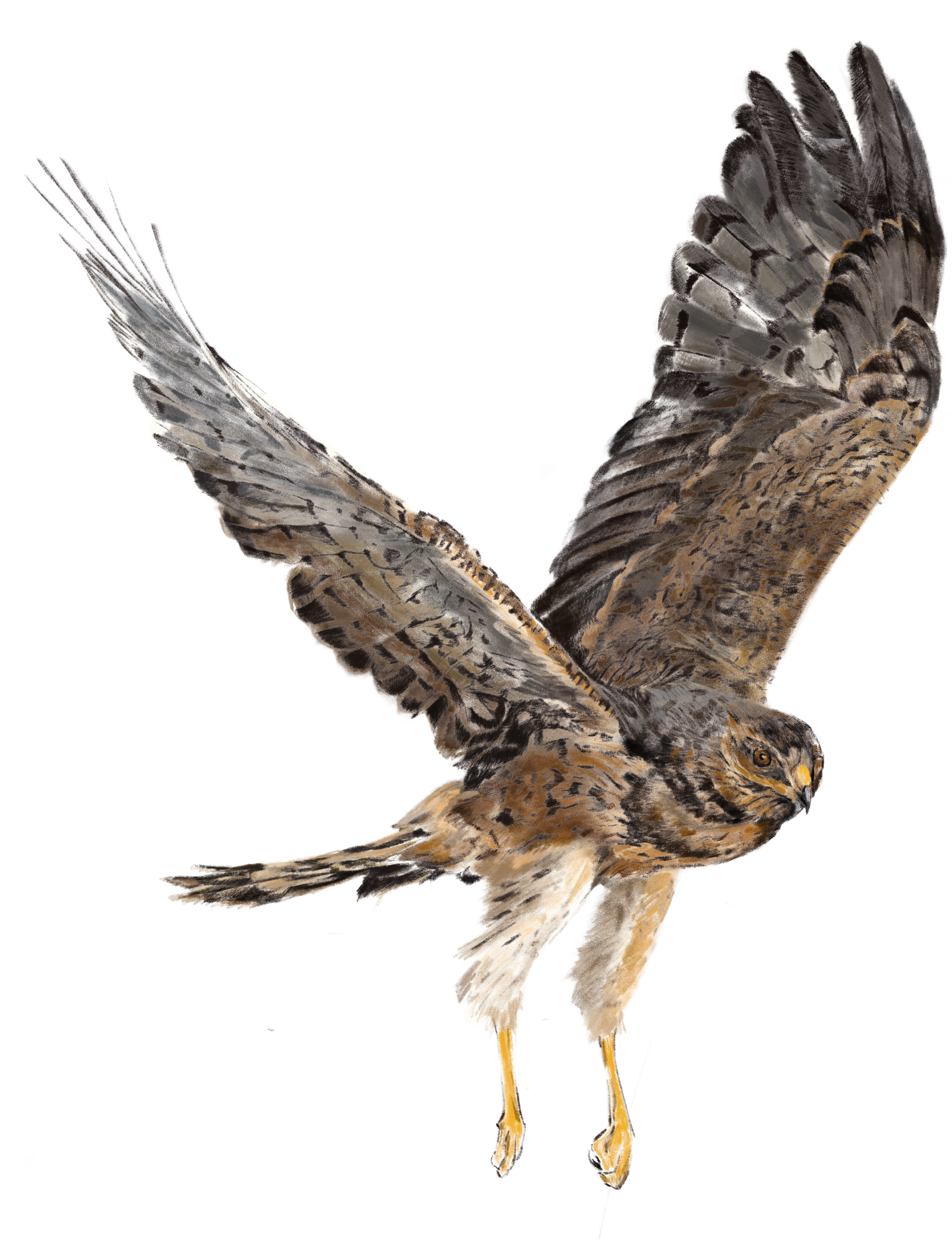
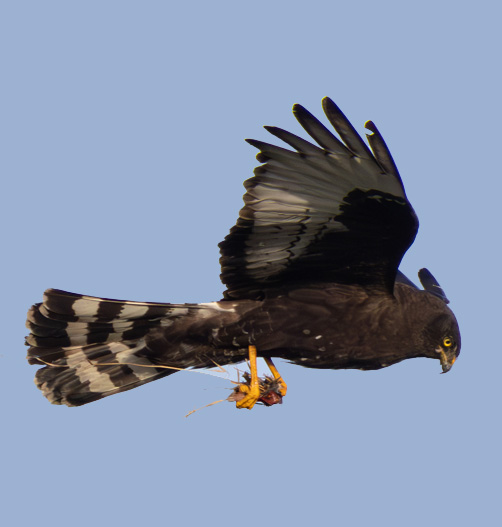
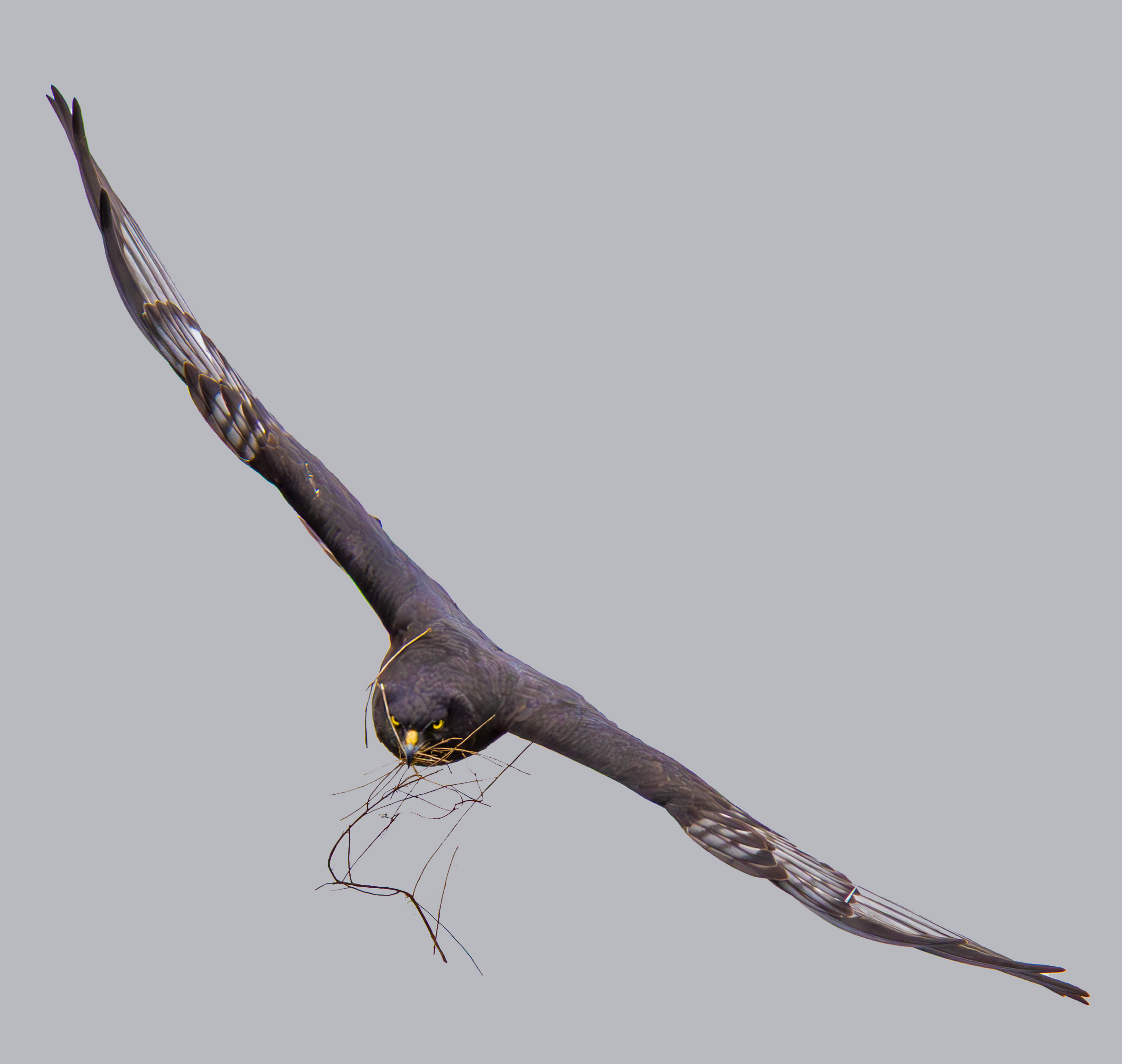
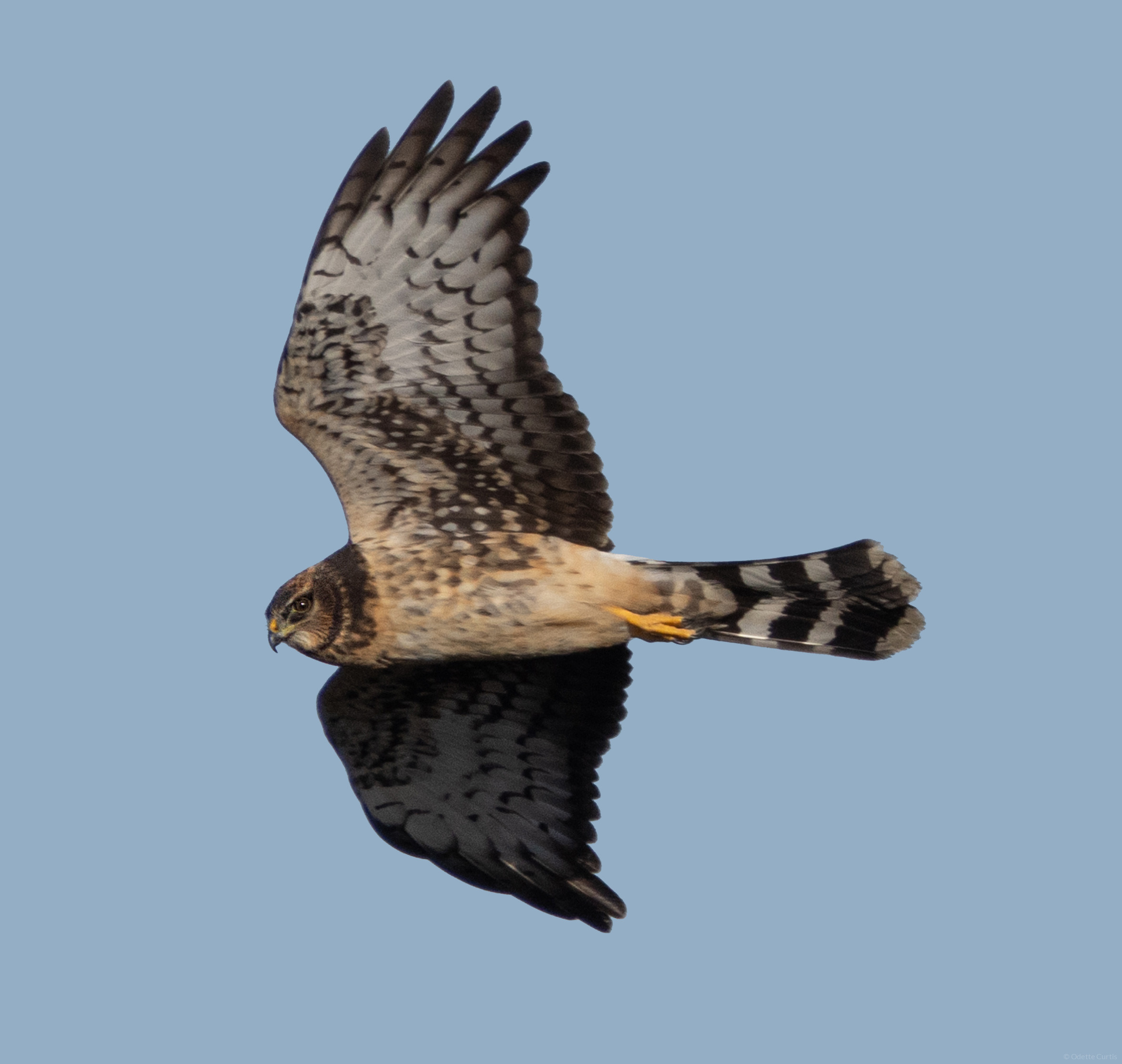
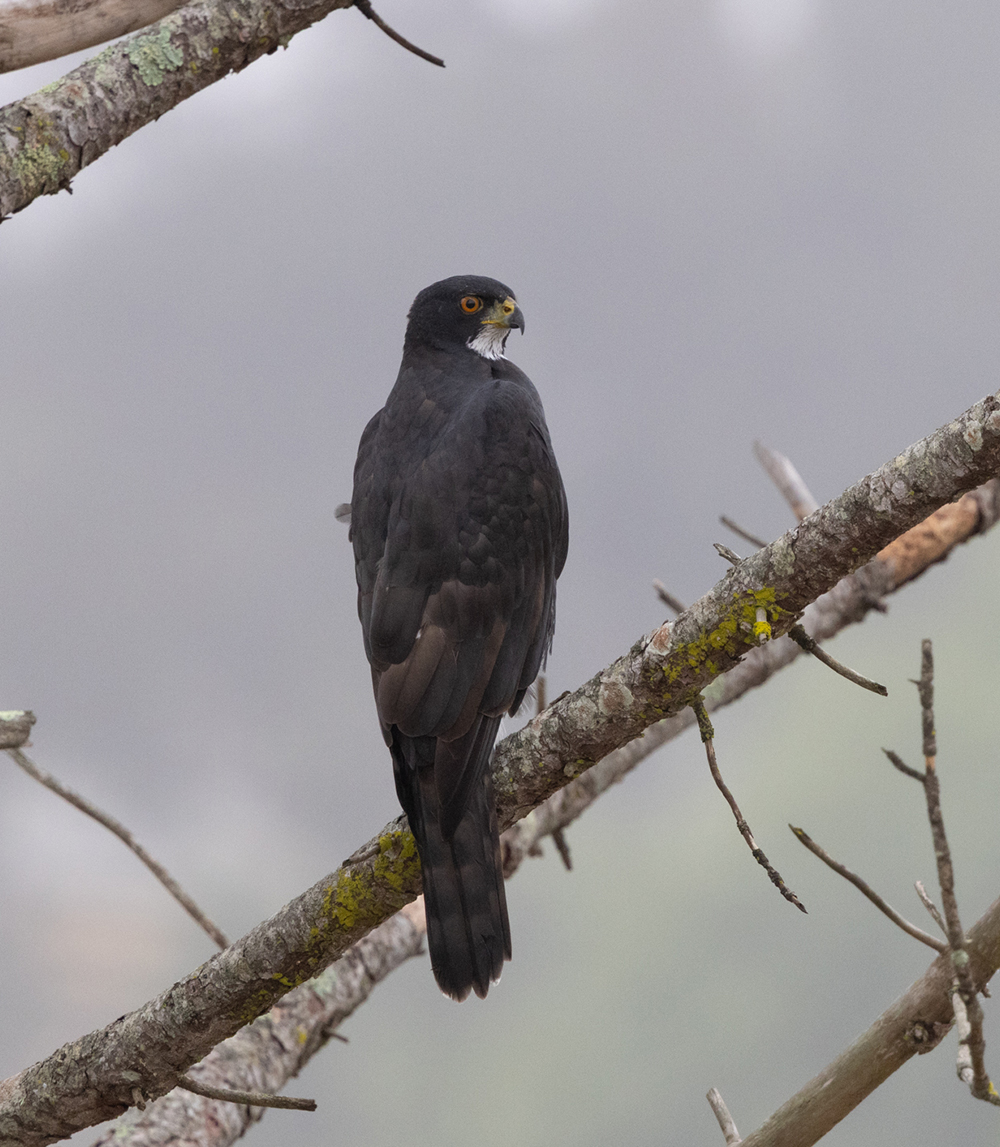
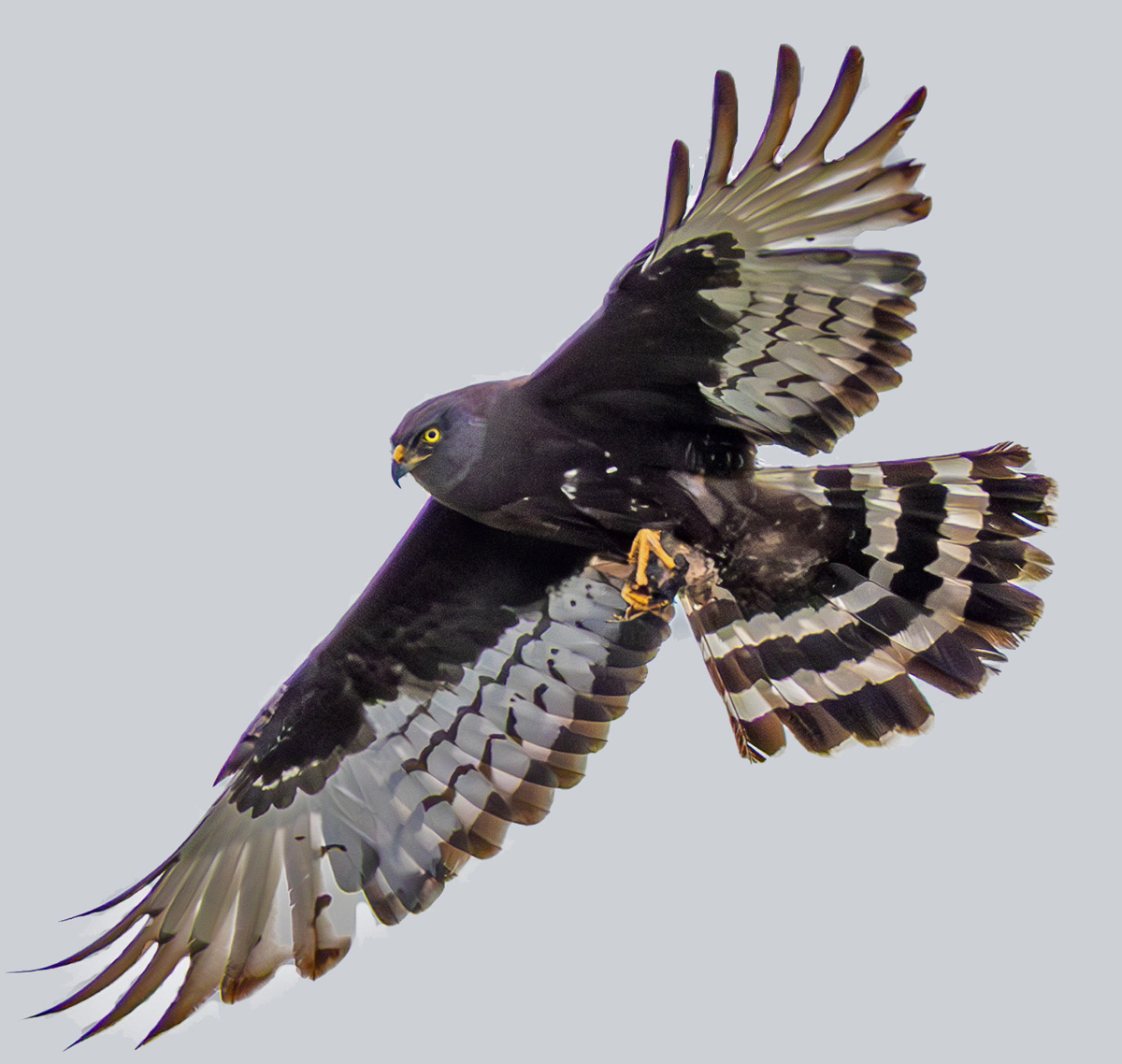
Identification
How to recognise
a Black Harrier


Distribution and range
Breeding Black Harriers are found only in southern Africa, with most of the population occurring in South Africa. Their distribution is closely linked to areas of intact natural vegetation, particularly in the Western Cape, and parts of the Northern Cape (especially the ephemeral west-flowing rivers) and the Eastern Cape grasslands.
However, Black Harriers are highly nomadic outside the breeding season, so much so that they are actually classified as a ‘migratory’ species. When breeding is over, they can travel long distances across the country, moving between regions in search of food and suitable habitat.
These movements highlight the importance of landscape-scale conservation, as the birds rely on different habitats across vast areas throughout the year.
BLACK HARRIER HABITATS
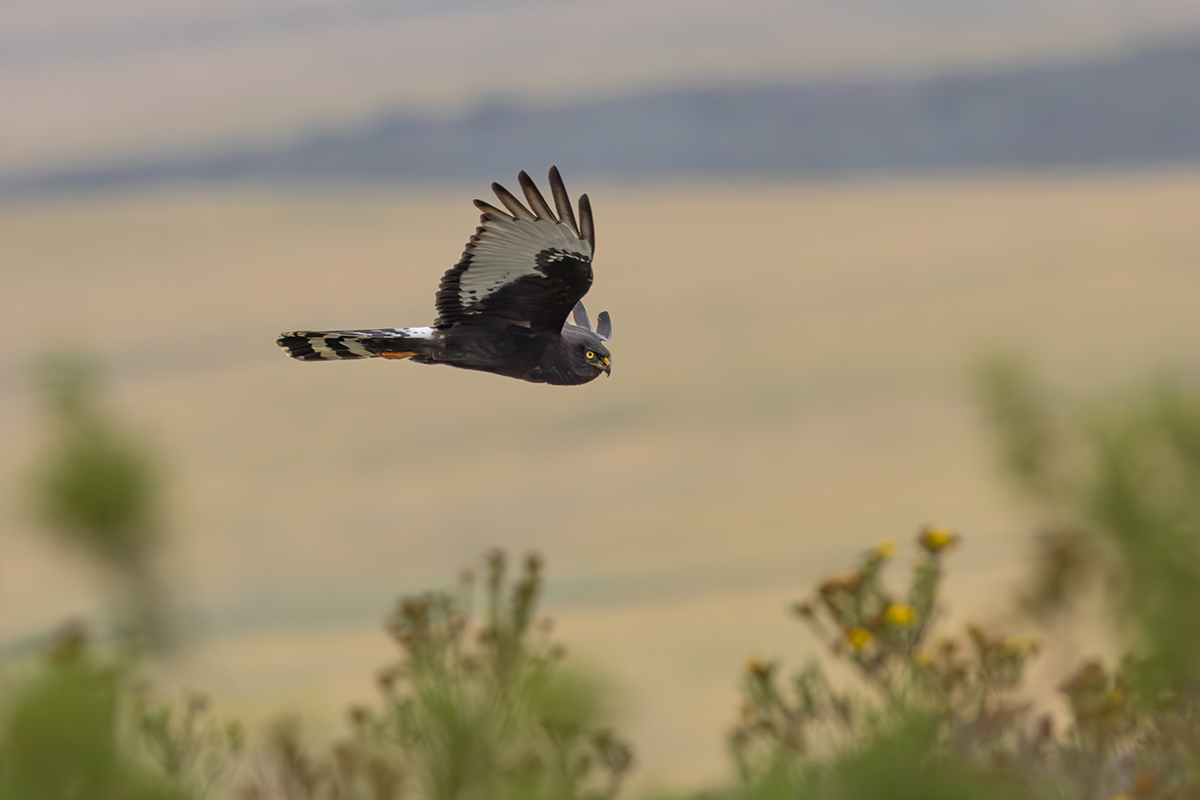
While Black Harriers frequently hunt in croplands and pastures, they do not breed in them, thus these do not provide a proxy for the natural habitats upon which they depend. Natural habitat therefore remains critical, especially during the breeding season. The loss and fragmentation of these landscapes is one of the main reasons the Black Harrier is now so incredibly threatened.
Black Harriers are strongly associated with natural vegetation, particularly renosterveld and fynbos – both threatened, with renosterveld under the most pressure given that only around 5% remains. These landscapes provide essential breeding and hunting habitat. In coastal areas, they favour marshlands where they sometimes overlap with African Marsh Harriers.
They also use other habitats, including:
- Grasslands (especially in the Eastern Cape)
- Karoo shrublands (typically on migration across to greener sites)
- Agricultural landscapes (only for hunting)
- Montane areas (for breeding in cooler climates)
- Desert areas (but only following exceptional rains)
Movement and migration
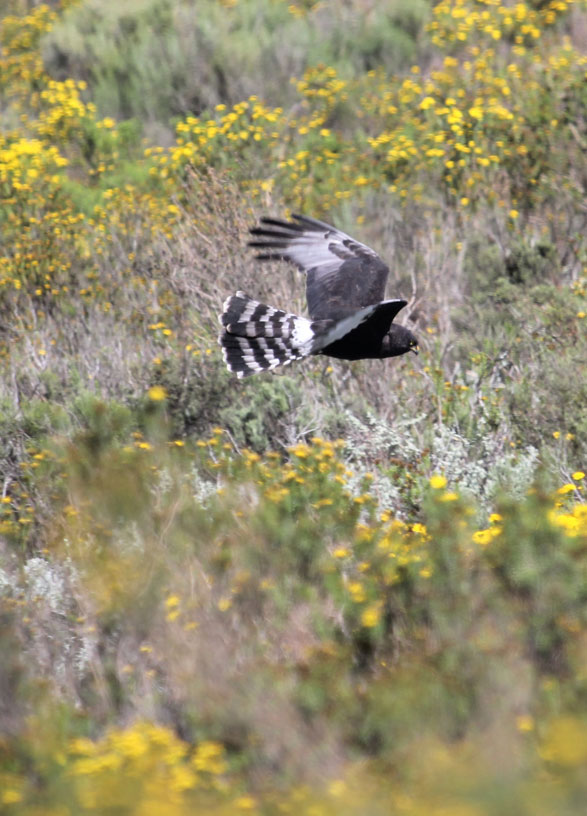
One of the most fascinating aspects of Black Harrier biology is their movement across landscapes. Unlike many other species with regular migratory routes, Black Harriers move nomadically across the landscape, moving on average between 250 km and 400 km in a day (the record is a bird that travelled 520 km over 12 hours high across the Karoo).
These birds travel widely, often moving between provinces. They follow the rains, appearing in the winter-rainfall areas of the Western and Northern Capes in winter, and most depart for the summer rains in the east in summer after breeding. About 10% to 20% remain in the west in the summer if prey remains plentiful. It is not unusual for birds to travel into the highlands of Lesotho above 3000 m or into the Free State and occasionally Mpumalanga grasslands. Movements vary widely between Black Harrier individuals and seasons, making each bird’s journey unique. Following a poor rain season in the Overberg, about five tracked birds were followed to the typically arid Richtersveld/Port Nolloth area in north west South Africa, where two birds bred, one as far north as the Kgalagadi Transfrontier Park! Their ability to locate areas with high resources and green vegetation indices mimics other arid-adapted birds that wander over large areas searching for food.
Understanding where Black Harriers travel helps conservationists identify important habitats and reduce threats across the landscapes they depend upon.
Breeding biology
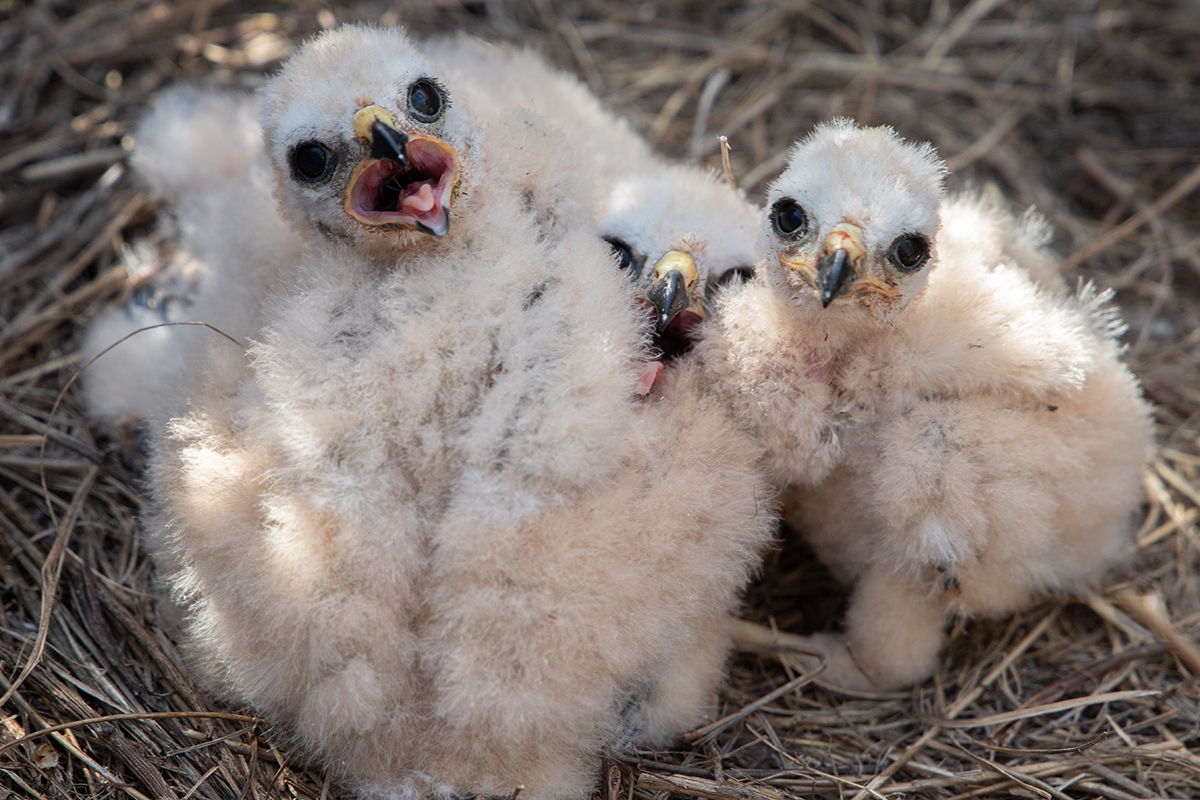
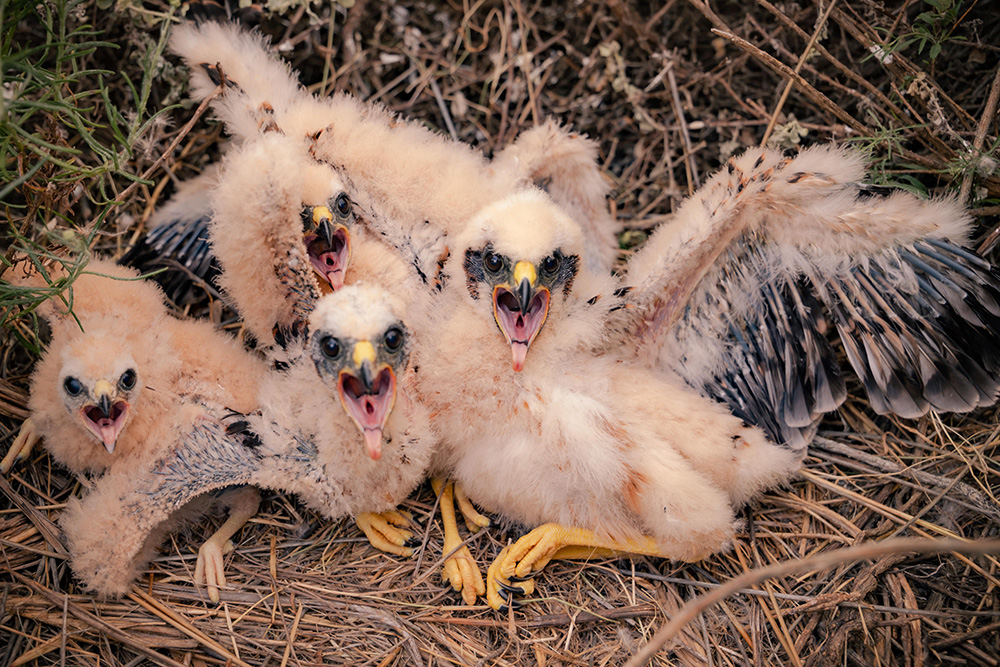
Black Harriers typically breed in natural vegetation such as renosterveld or fynbos, where they nest on the ground in dense cover. This makes them vulnerable to disturbance, predation and habitat loss.
They have relatively low breeding success compared to many other raptors. They first breed at around three years of age – laying eggs from June to December, based on favourable environmental conditions. They typically lay three to four eggs, and hatching success is usually just over 60%. However, the survival rate of fledglings has been estimated at lower than 50%. Aside from anthropogenic threats, these youngsters are also at risk of predation by, for example, caracal, genets and mongooses.
Diet and hunting behaviour
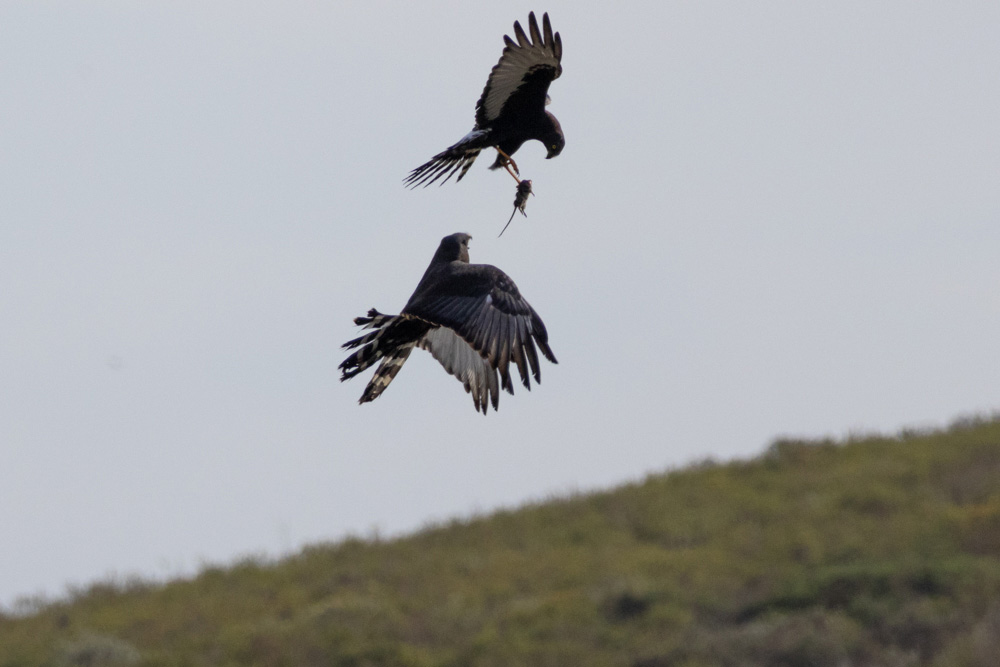
Black Harriers are skilled hunters, feeding mainly on small mammals, birds and occasionally reptiles. They hunt low over vegetation, using their keen eyesight and agility to locate prey.
Their role as predators makes them an important part of the ecosystem, helping to maintain balance within the landscapes they inhabit. And when ecosystems are affected by climate-related stresses, Black Harriers are directly affected, as nesting habitat availability is predicted to decrease with increasing climate change.
Why biology matters for conservation
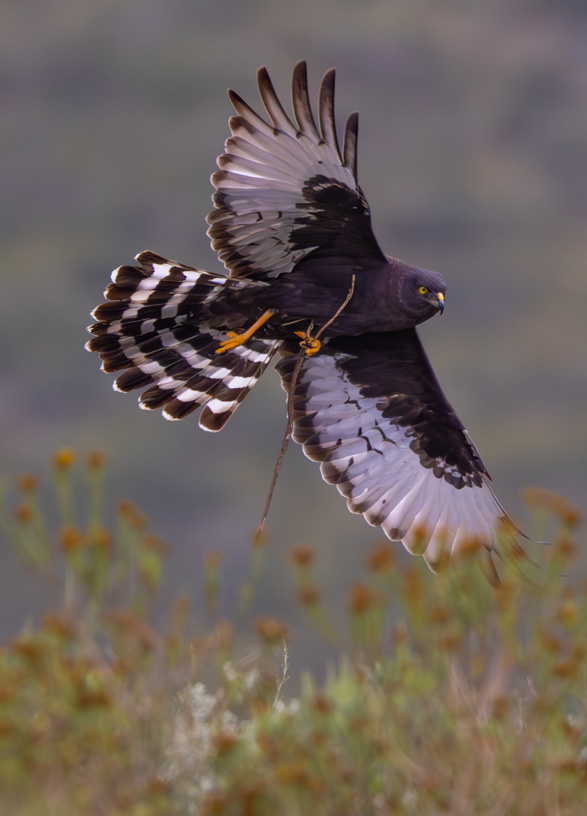
The Black Harrier’s biology tells a clear story: this is a species that depends on large, connected landscapes, intact natural habitat and minimal disturbance.
Their wide-ranging movements, low population size and specialised habitat needs make them particularly vulnerable. But they also highlight where conservation efforts can make the biggest difference.
By understanding how Black Harriers live, move and breed, conservation partners can work together to protect the landscapes that these remarkable birds depend upon.

Black Harrier conservation status
The Black Harrier is currently listed as Endangered on the national Red List as well as the IUCN Red List of Threatened Species, with a small and declining population. Around 1 200 individuals, or 420 breeding pairs, are believed to remain, making it one of the most threatened raptors in southern Africa.
Because of this, protecting Black Harriers requires careful monitoring, collaborative conservation and the protection of critical habitat across landscapes.