PROTECTING THE
BLACK HARRIER
This website is dedicated to the
BLACK HARRIER,
a highly threatened, endemic raptor found only in South Africa, Lesotho and Namibia.
brink of extinction
This bird teeters on the brink of extinction with a population smaller than the other more famous icons of conservation: The Black Rhino, Blue Crane, Blue Swallow and African Penguin. Our aim is to promote awareness and the latest conservation and research.
Because as we know: We will conserve only what we love; love what we understand; and understand only what we are taught [Baba Dioum: Senegalese Conservationist]
A true South African species
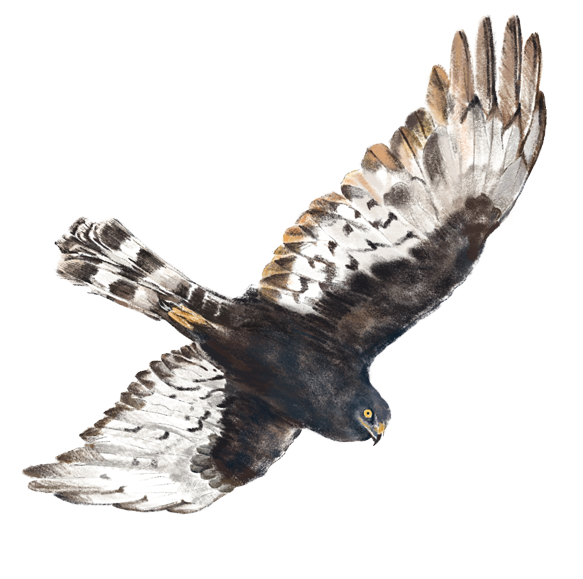
The Black Harrier is southern Africa’s most threatened endemic bird of prey. Around 1 200 individuals remain, and these occur almost entirely in South Africa. Its breeding range is centered on the Cape Floristic Region, the smallest Plant Kingdom on Earth, a severely threatened system supporting extraordinary levels of biodiversity.

The Endangered Black Harrier faces a growing list of pressures that threaten its survival.
Birdlife South Africa
Bird of the Year 2026
IN THE SPOTLIGHT
The Black Harrier has been named the BirdLife South Africa Bird of the Year for 2026. This allows us to shine a spotlight on the Black Harrier throughout the year, highlighting the many threats it faces, the urgent need to protect the species and the landscapes upon which it depends, while championing the conservation of this elegant beauty. This is the first species to be chosen by the public as the BOTY, and we are hugely grateful to the growing fan club who care for this beleaguered species.
Copyright © Sumi Gous & ORT
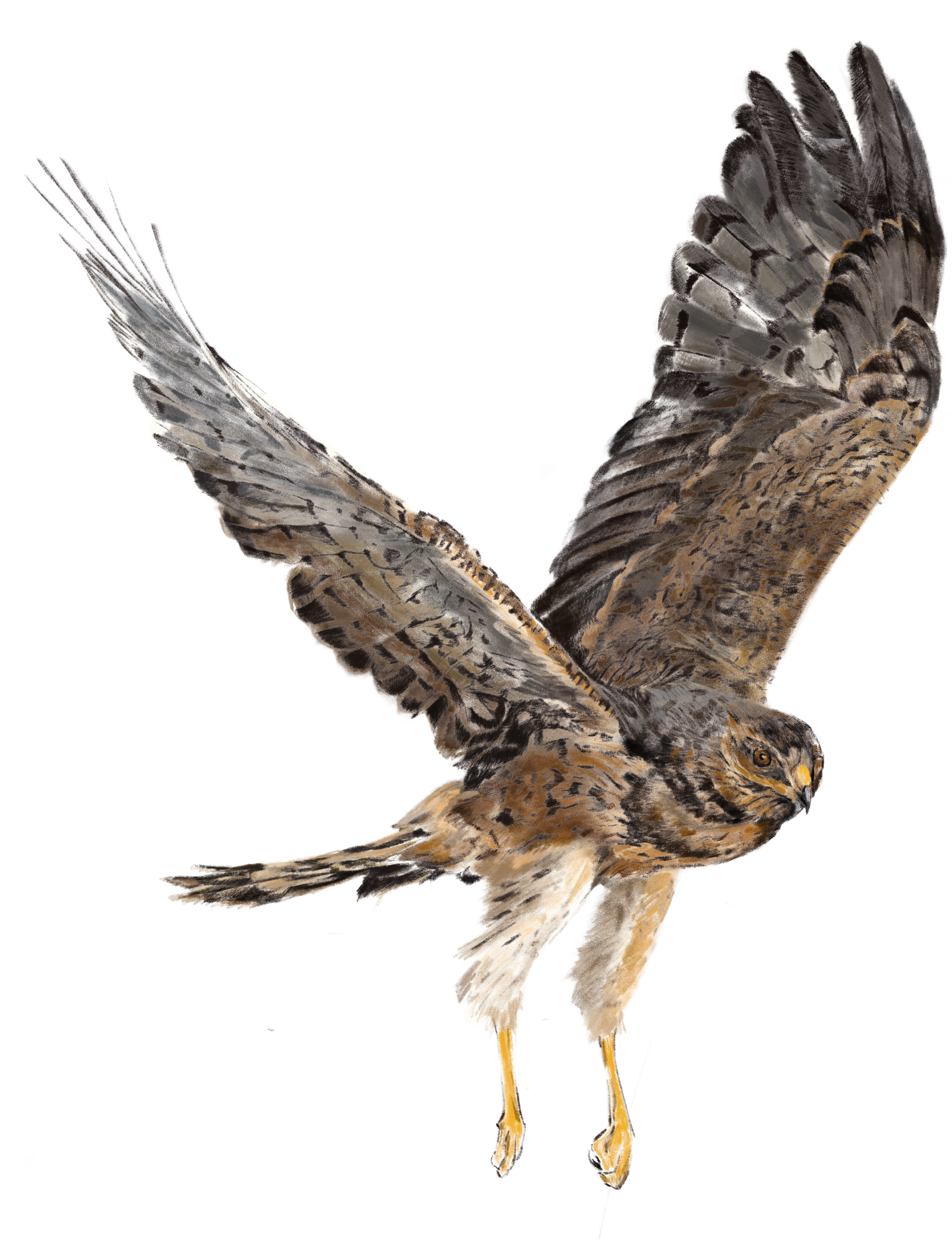
Black Harrier quick facts
Status: ENDANGERED
Population: 1 200 individuals & declining
Range: Southern Africa
Preferred breeding habitats: Fynbos, renosterveld, strandveld & grasslands.
Main threats: Habitat loss, climate change and collisions with powerlines & wind turbines.
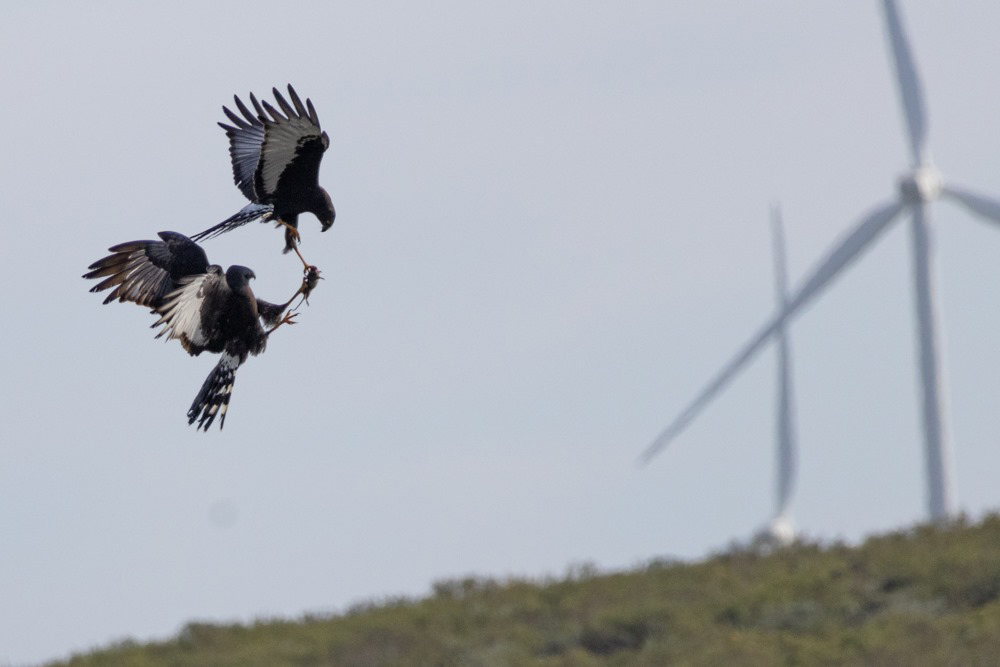
The Black Harrier faces a range of threats across landscapes, with research showing that losing just five additional individuals a year will lead to the species’ extinction in 75 years. Threats include habitat loss, collision risks – with wind turbines and powerlines in particular – and climate change. With a small population that is still declining, these pressures continue to have significant impacts.
Our research also shows that like many rare species (think Cheetah) they have low genetic diversity. This means that they may not be able to adapt to a hotter, drier world, because those genes have been lost as their population size has shrunk.
Threats facing the Black Harrier
SHOP FOR Black Harrier conservation
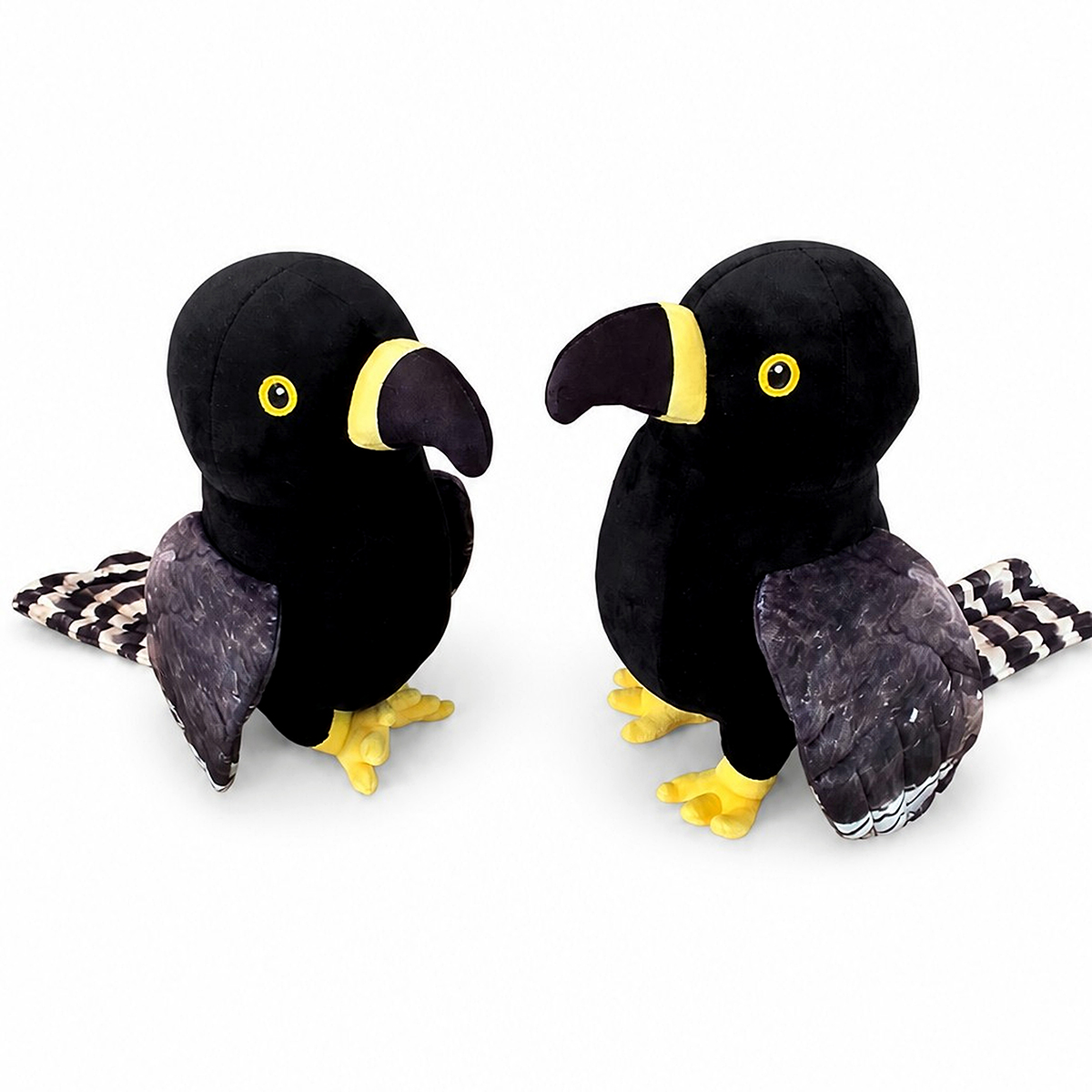
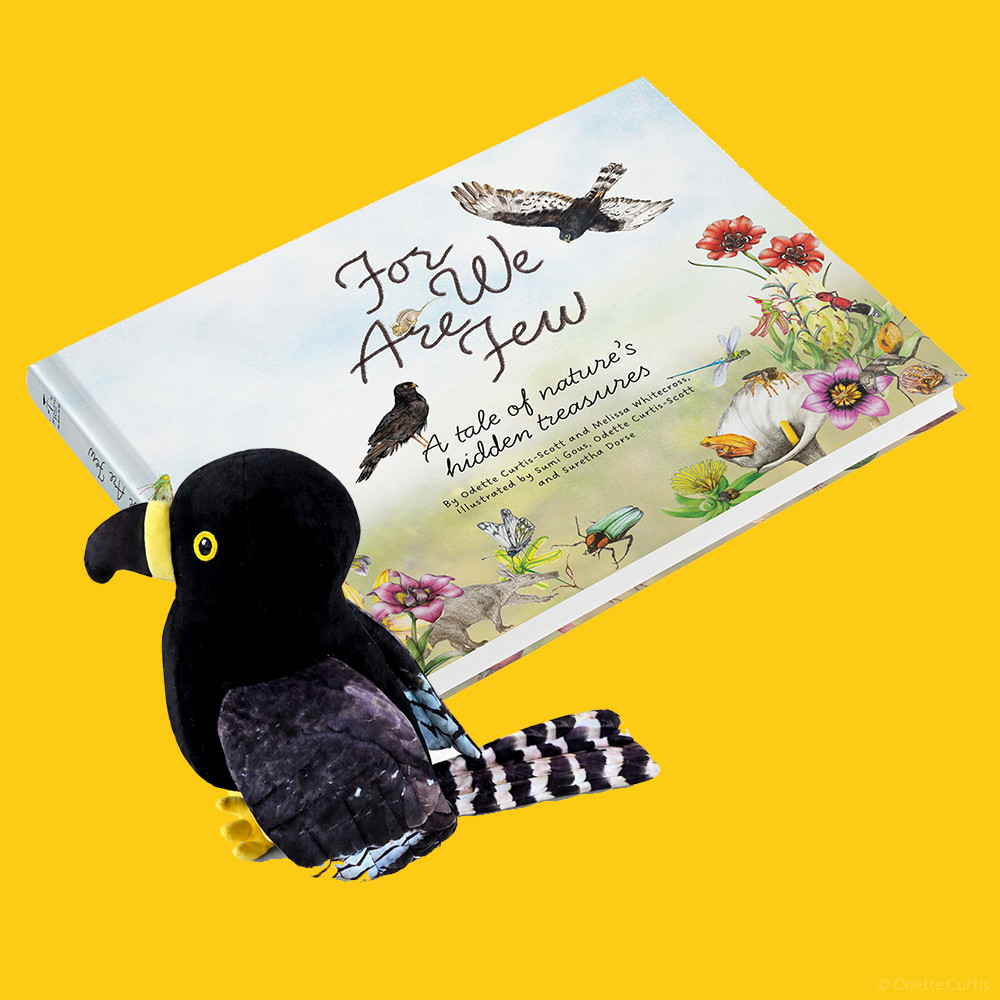
BLACK HARRIER Plushie
Available from the Overberg Renosterveld Trust (Western Cape) or Birdlife South Africa (Gauteng)
R250


Why the Black Harrier matters
Watching a Black Harrier forage over the veld, or performing their spectacular sky-dancing displays, is a breath-taking sight, a never-to-be-forgotten experience. They epitomise elegance and grace and their disappearance from the Cape Floristic Region, under our watch, would be tragic. As predatory animals, they play a vital role in maintaining the populations of their favoured prey, in particular field mice, vlei rats, quail and small passerine birds. They form a critical part of the Cape Floristic Region’s unique ecosystem, with its exceptional levels of endemism and biodiversity. Because of their dependence on healthy landscapes and intact ecosystems, the species is considered a valuable indicator of ecosystem integrity.
Tracking Black Harriers
Black Harriers travel across vast landscapes within southern Africa. By tracking individual birds, conservationists are learning more about their movements and the habitats they depend upon, while also deepening their understanding of the threats facing these magnificent raptors.
Conservation in action
Across southern Africa, conservation partners are working together to protect the Black Harrier. From habitat protection and monitoring to research and awareness, collaborative conservation is key.
WorkING TOGETHER

Protecting the Black Harrier requires collaboration across organisations, landscapes and expertise. The Black Harrier Task Force brings partners (NGOs, government agencies & specialists) together to support long-term. Meet our partners:










Support Black Harrier conservation
The Black Harrier faces a suite of threats across its range. Your support helps protect habitat, contribute to research & monitoring and build awareness among those who hold its future in their hands.
Email: info@blackharrier.org.za
Frequently Asked Questions
How many Black Harriers are left?
Fewer than 1 300 Black Harriers remain in the wild, making them one of the most threatened raptors in Africa. Their population is small and fragmented, and is still declining at 2.3% per year
Where do Black Harriers occur?
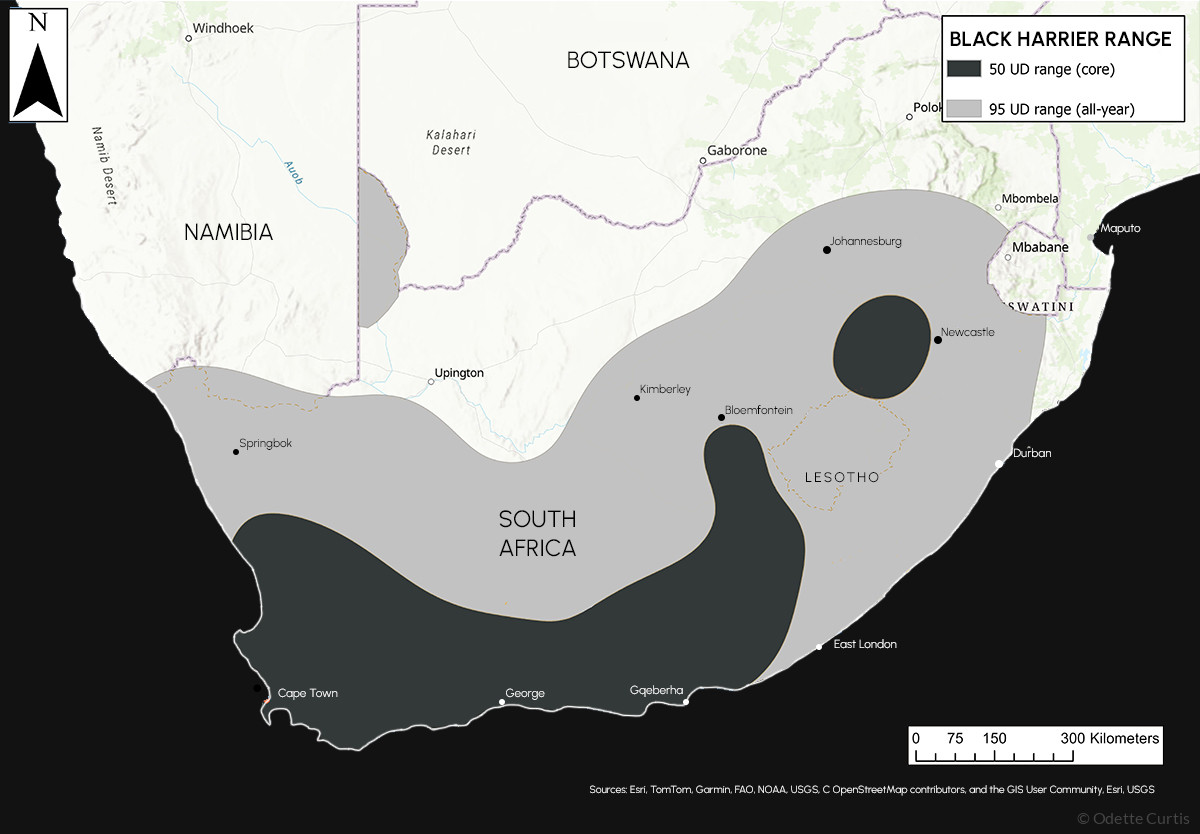
Black Harriers are found mainly in South Africa, particularly in the Western Cape, Eastern Cape and parts of the Northern Cape. They depend on open landscapes such as coastal or montane fynbos, renosterveld and grasslands for breeding and hunting. But they do range far and wide, and birds are found on the far northwest Namibian coast around the ephemeral rivers and on migration they occur in Lesotho and as far north as the Devon grasslands just east of Johannesburg. They have the smallest range of any continental species of harrier.
Why are Black Harriers Endangered?
Black Harriers are Endangered due to habitat loss and degradation in their favoured breeding areas and collisions with man-made infrastructure such as wind turbines and powerlines. Climate change, often seen as a thing of the future, is affecting our birds now, through reduced rainfall and increasing temperatures. Both are detrimental to harriers who rely on good rains for nesting areas and to promote good mouse populations. This will ultimately reduce the areas that are suitable for breeding and reduce their already tiny population. Ironically, wind turbines designed to combat climate change are killing harriers at an unsustainable rate and also threatening their long-term survival.
What is a Black Harrier?
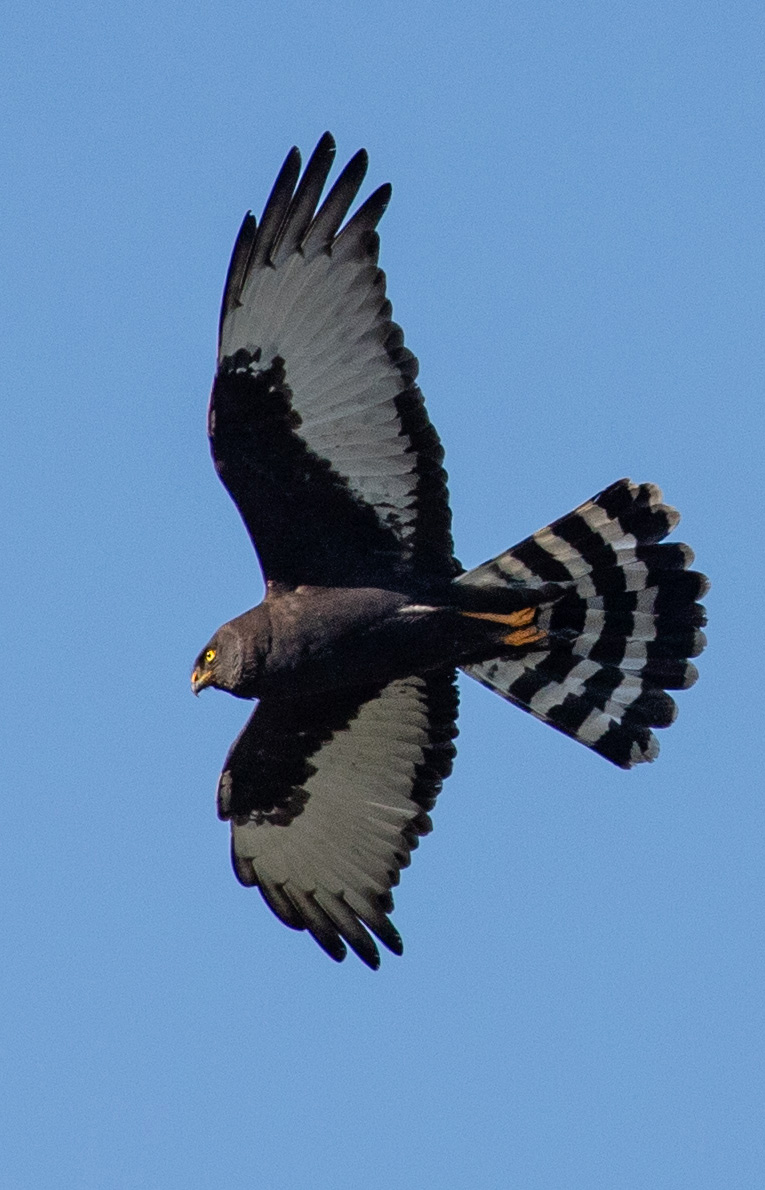
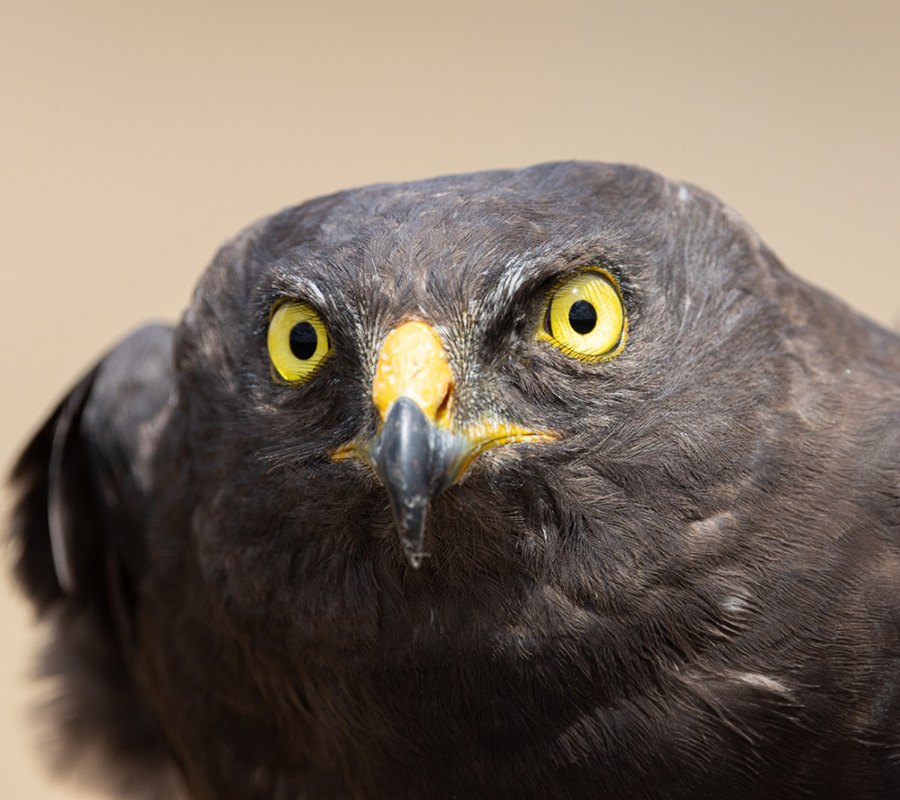
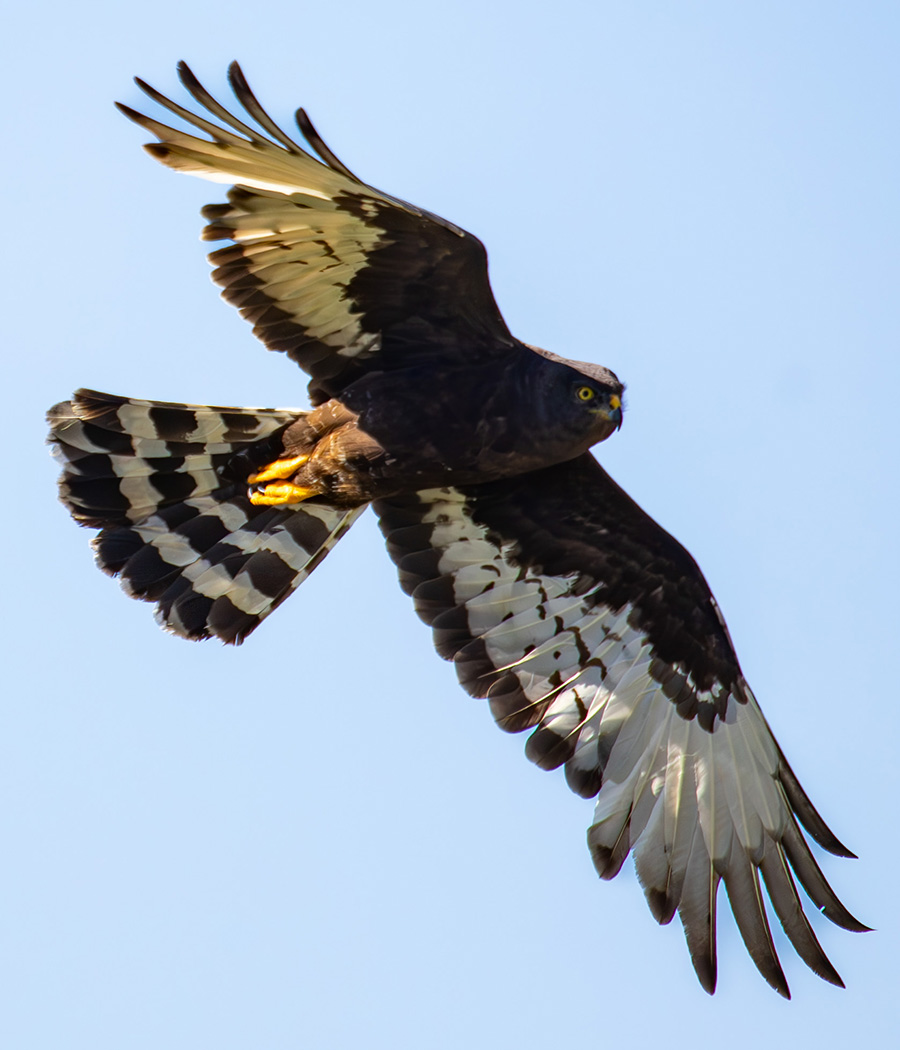
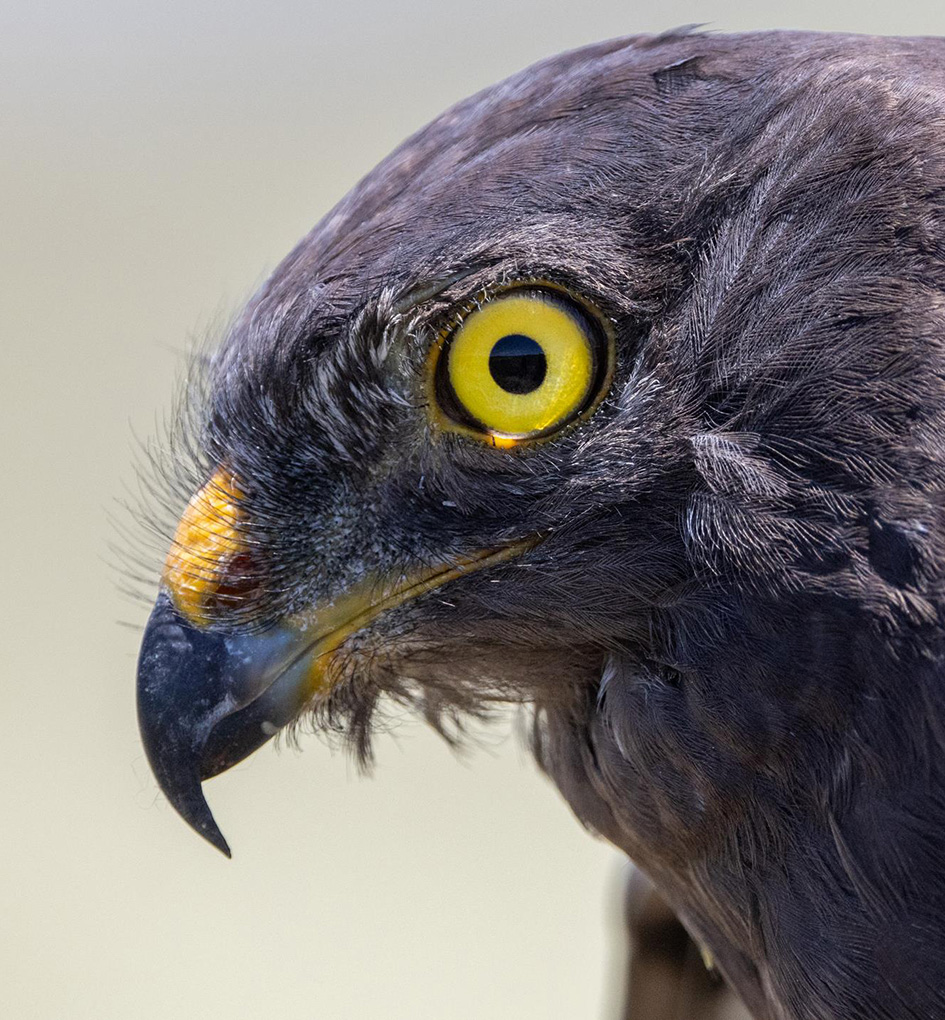
The Black Harrier (Circus maurus) is a medium-sized bird of prey found only in southern Africa. This striking raptor, with its charcoal-black plumage, white rump and long barred tail, is one of Africa’s most endangered birds. Unlike most other raptors that breed on cliffs or in trees, harriers breed on the ground. They also employ a unique hunting method known as ‘quartering’, which involves flying low over shrublands or grasslands, searching for small mammals (mice) and birds. They are one of 16 species worldwide that probably evolved from forest dwelling sparrowhawks (accipiters) between 11 and 13 million years ago. The Black Harrier’s closest relative is ironically the palest harrier – the Pallid Harrier – that lives in the Steppes of eastern Europe and Russia and still comes to check up on its cousin every now and again in the summer.
How can I help protect Black Harriers?
You can help protect Black Harriers by supporting conservation organisations that are working to protect Black Harriers, including the Black Harrier Task Force (currently chaired by the Overberg Renosterveld Trust).
As a landowner, you can ensure that you avoid using barbed wire on your fences, particularly on the higher strands. If a wind farm development is proposed on your land, or nearby, you can contact the Black Harrier Task Force to learn more about whether or not Black Harriers are known from your area, as these are often missed in poor-quality Environmental Impact Assessments.
As a birder, naturalist or landowner, if you suspect harrier breeding activity in your area, please report it to the Black Harrier Task Force.
If you see a Black Harrier that is in need of a wildlife rescue, contact the Black Harrier Task Force.
And of course, help us to spread awareness about this Endangered species by referring neighbours and colleagues to this website dedicated to conserving Black Harriers.
What do Black Harriers eat?
Black Harriers mainly feed on small mammals and birds., but will also take reptiles where mice and birds become scarce. They hunt by flying low over the landscape, using their keen eyesight and rounded owl-like facial disc to spot and hear prey. Research has shown that like owls, they can pinpoint a mouse unseen, beneath the vegetation, and catch it unseen. They are not as accurate as owls, but research has also shown that harriers occasionally hunt at night when nestling demands are high.
Where can I see a Black Harrier?
Black Harriers are most often seen in the Western Cape, particularly in strandveld, renosterveld and fynbos landscapes. They are also found in parts of the Eastern Cape and Northern Cape, depending on the time of year and rainfall events – harriers are very nomadic, following good rains which result in booms in their favourite prey (mouse) numbers.
Are Black Harriers found only in South Africa?
Most Black Harriers are found in South Africa, although they occasionally visit, and possibly even breed in Lesotho and Namibia. In Namibia young harriers have been recorded in the ephemeral river beds of the Hoanib and the Ugab Rivers, strongly suggesting that they breed there Their global population is confined to southern Africa.
Why are Black Harriers important?
Like other raptors, Black Harriers are an important indicator of healthy ecosystems. Why is that? Because without a healthy prey base underpinned by an intact and healthy ecosystem, species like raptors at the top of the food chain cannot survive. Protecting them helps conserve threatened landscapes like renosterveld and fynbos, with their rich plant diversity. Thus protecting the habitat of the Endangered Black Harrier benefits numerous other species.
Gallery